Proper tree maintenance is essential for long-term landscape health, safety, and aesthetics. One of the most important aspects of tree care is pruning, which must be done with precision and an understanding of tree biology. In this article, we’ll explore the methods and practices an arborist uses to effectively prune trees and why professional expertise matters. When done correctly, pruning not only improves appearance but also strengthens the tree’s structure and reduces risk around your property.
Why is Tree Pruning Necessary?
Tree pruning plays a critical role in maintaining and improving overall tree health. By removing dead, diseased, or damaged branches, an arborist helps prevent decay from spreading to healthy tissue. This targeted removal allows the tree to allocate nutrients more efficiently to viable branches and foliage.
Over time, this improves vigor, resilience, and longevity. Without proper pruning, pathogens and pests can take advantage of weakened areas, leading to more extensive damage.
Safety is one of the most practical reasons for regular pruning. Overgrown or structurally weak branches can pose serious hazards, especially during storms or high winds. A skilled arborist identifies limbs that are likely to fail and removes them before they become a threat to people, vehicles, or nearby structures. This proactive approach reduces liability and helps prevent costly property damage. In residential and commercial settings alike, strategic pruning is a key component of risk management.
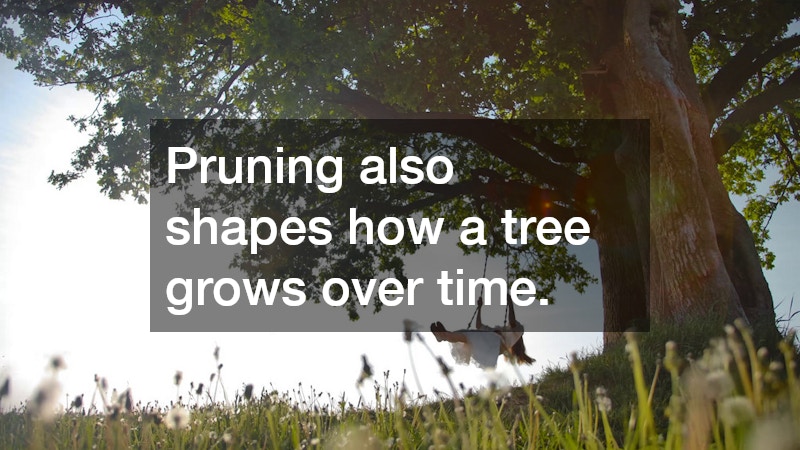
Pruning also shapes how a tree grows over time. By selectively removing certain branches, an arborist can influence the tree’s structure, encouraging balanced development and strong branch attachment. This is especially important for young trees, where early structural corrections can prevent future issues such as splitting or uneven canopies. Proper pruning encourages upward growth, reduces overcrowding, and supports a stable framework that can withstand environmental stress.
What Techniques Do Arborists Use for Pruning?
Crown thinning involves the selective removal of branches throughout the canopy to improve light penetration and air circulation. This technique does not significantly alter the overall shape or size of the tree but instead reduces density. An experienced arborist carefully chooses which branches to remove to maintain structural integrity while improving internal airflow. Better air movement reduces the risk of disease and allows sunlight to reach lower branches and surrounding plants.
Crown raising focuses on removing the lower branches of a tree to increase clearance beneath the canopy. This is often done to accommodate pedestrians, vehicles, buildings, or visibility requirements. A qualified arborist ensures that this process is gradual and balanced so the tree remains stable. Removing too many lower branches at once can stress the tree, so the work is typically spread over time if significant height adjustment is needed.
Crown reduction is used when a tree has grown too large for its space or poses a potential hazard due to size and weight distribution. Instead of topping, which is harmful, an arborist carefully cuts branches back to appropriate lateral growth points. This preserves the natural shape while reducing overall height and spread. When done correctly, crown reduction maintains structural integrity and minimizes stress on the tree, allowing it to continue growing safely within its environment.
How Do Arborists Decide Which Branches to Prune?
One of the first steps in pruning decision-making is identifying unhealthy branches. An arborist looks for signs such as discoloration, fungal growth, cracks, or deadwood. These branches are removed to prevent decay from spreading and to reduce the likelihood of breakage. Early detection is essential, as it allows targeted intervention before the problem affects the entire tree.
Beyond health concerns, structural integrity plays a major role in pruning decisions. A skilled arborist evaluates how branches are distributed and whether the tree has any imbalances that could lead to failure. Co-dominant stems, weak branch unions, or excessive canopy weight may all require correction. The goal is to create a stable, well-balanced structure that can withstand wind, rain, and seasonal stress.
Timing is another important factor in the pruning strategy. Different tree species respond differently depending on the season, and an arborist takes this into account before making cuts. For many trees, dormant seasons like late winter are ideal because they reduce stress and minimize pest exposure. However, corrective pruning for safety reasons may be done at any time of year. Understanding seasonal growth cycles ensures that pruning supports recovery and long-term vitality.
Tree pruning is both a science and an art, requiring knowledge, precision, and experience to achieve the best results. From improving health and safety to shaping long-term structure, proper pruning has lasting benefits for any landscape. Hiring a professional arborist ensures that each cut is intentional and beneficial rather than harmful or excessive. Whether managing mature trees or guiding young growth, an arborist plays a vital role in maintaining safe, healthy, and visually appealing outdoor spaces.